

Thinking is still the work. How to create tasteful outputs by understanding yourself.
Putting in the reps to build your taste muscle.
I’ve been trying a lot of new tools recently (ie. Claude Design before my tokens got eaten up super fast). I come up with an idea to trial their output. I type a quick prompt, hit Enter, and get that sinking “ugh” feeling (🙄) when the end result comes back as AI slop (aka. the web’s new default).
I realised something annoying: the problem wasn’t the AI. It was that I wasn’t giving it what it needed to create something for me.
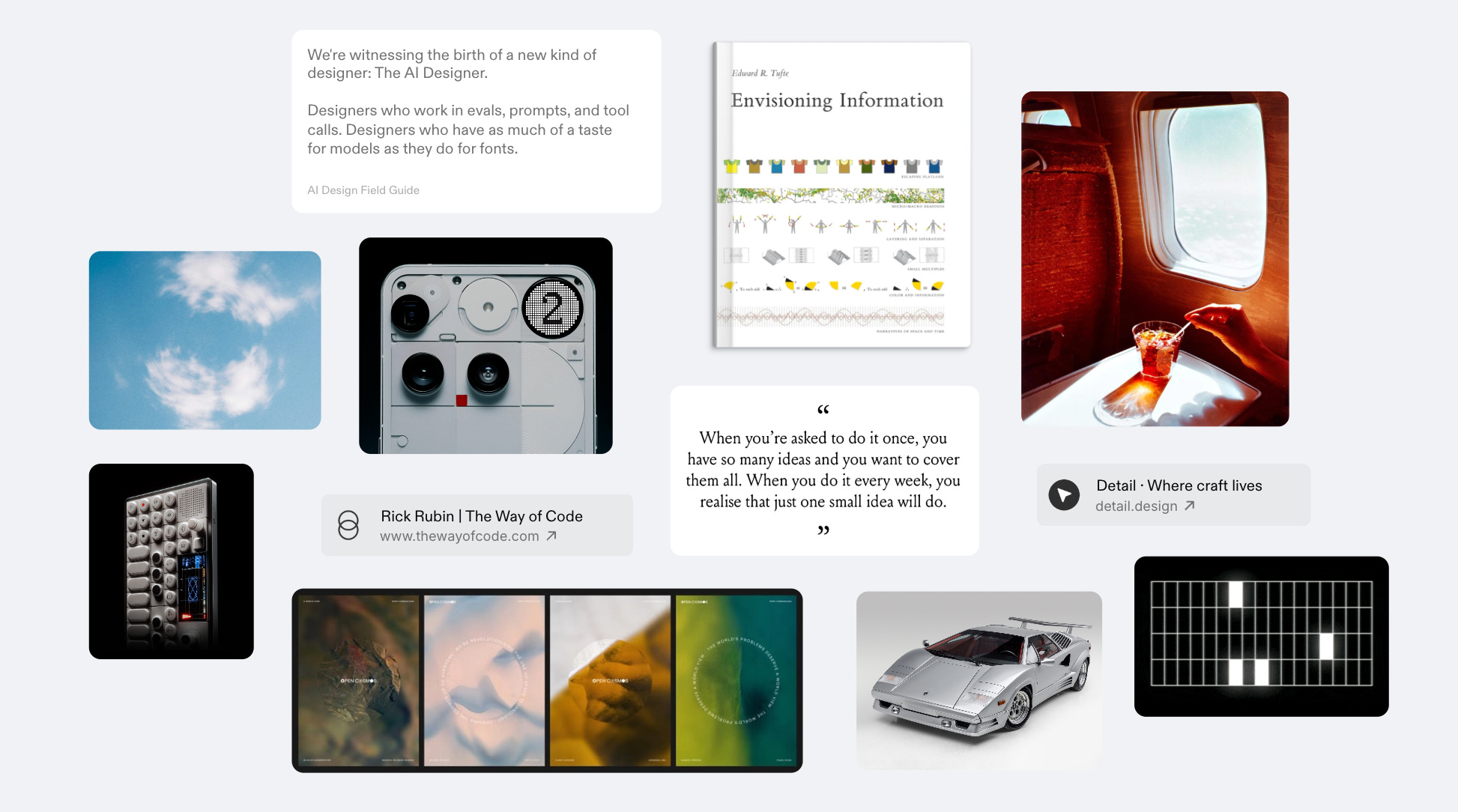
AI is a mirror. It reflects your taste, your judgment, your craft back at you.
There’s a specific kind of failure mode that looks like “the AI is bad”, but is actually: “I haven’t done my part”.
I haven’t clarified what I actually want. I haven’t provided enough context for the model to make tradeoffs. I haven’t explained my taste in a way that’s legible.
AI is extremely good at filling in blanks. And that’s why you get that meh feeling in an output → it fills those blanks with the internet’s average taste, unless you teach it otherwise.
What I’m chasing is considered outputs.
Not templated, not a generic Claude layout, not exactly like everything else already out there. Something that feels built with intention and attention to detail.
This is what people mean when they talk about ‘taste’.
To me, taste is all about reps - appreciating, reflecting, creating. It all counts towards a better gut-feel that something I design will work for the intended audience. Having taste requires intention, focus and care - it is the opposite of effortless.
It’s one thing to read an article on Substack, or browse beautiful imagery on are.na, (or doom-scroll on design twitter). But what makes you a 10x designer is recognizing why something feels nice to use or is beautiful to see.
“The accumulated weight of a thousand small judgments you don’t notice you’re making, until you sit down to externalize them and realize you can’t.”
Julie Zhuo, Founder of Sundial
Taste is being able to name what’s working and to recognise patterns across different inputs. The model can’t do that part for you. It’s incredibly personal.
Prompting isn’t the skill. Thinking is.
If your opinion is sharp, you’ll get better first drafts.
Where other people are using LLMs to write pretty much everything, you need to know and retain the skill of articulating your thinking. Don’t lose your ability to have a distinct point of view; to rationalize why something is good; to distill that into a clear ask. This is something you shouldn’t replace with AI.
Here are three ways that I’m honing my craft and using AI more intentionally:
Taste journal → skills.md
Ideas backlog
Use AI as a devil’s advocate
Conscious consumption
I often refer to myself as a digital hoarder. I have saved lists everywhere. Sublime, Notion, browser bookmarks, Mymind, Cosmos, Tiktok, Instagram, X.
And while collecting is good in the moment, it doesn’t mean anything if you haven’t truly absorbed with the content and made your mark on it.
I’ve started a practice that I’m hoping will become a habit.
I’ve created a Taste Journal in my second brain (Notion). Once a week, I sit down with the things I’ve read, watched, or saved during the week, and I write down what I actually took from it. Not an AI-generated summary. My take.
what landed (and what didn’t)
why it matters
what it reminds me of
where I could apply it next
ideas that it strikes within me
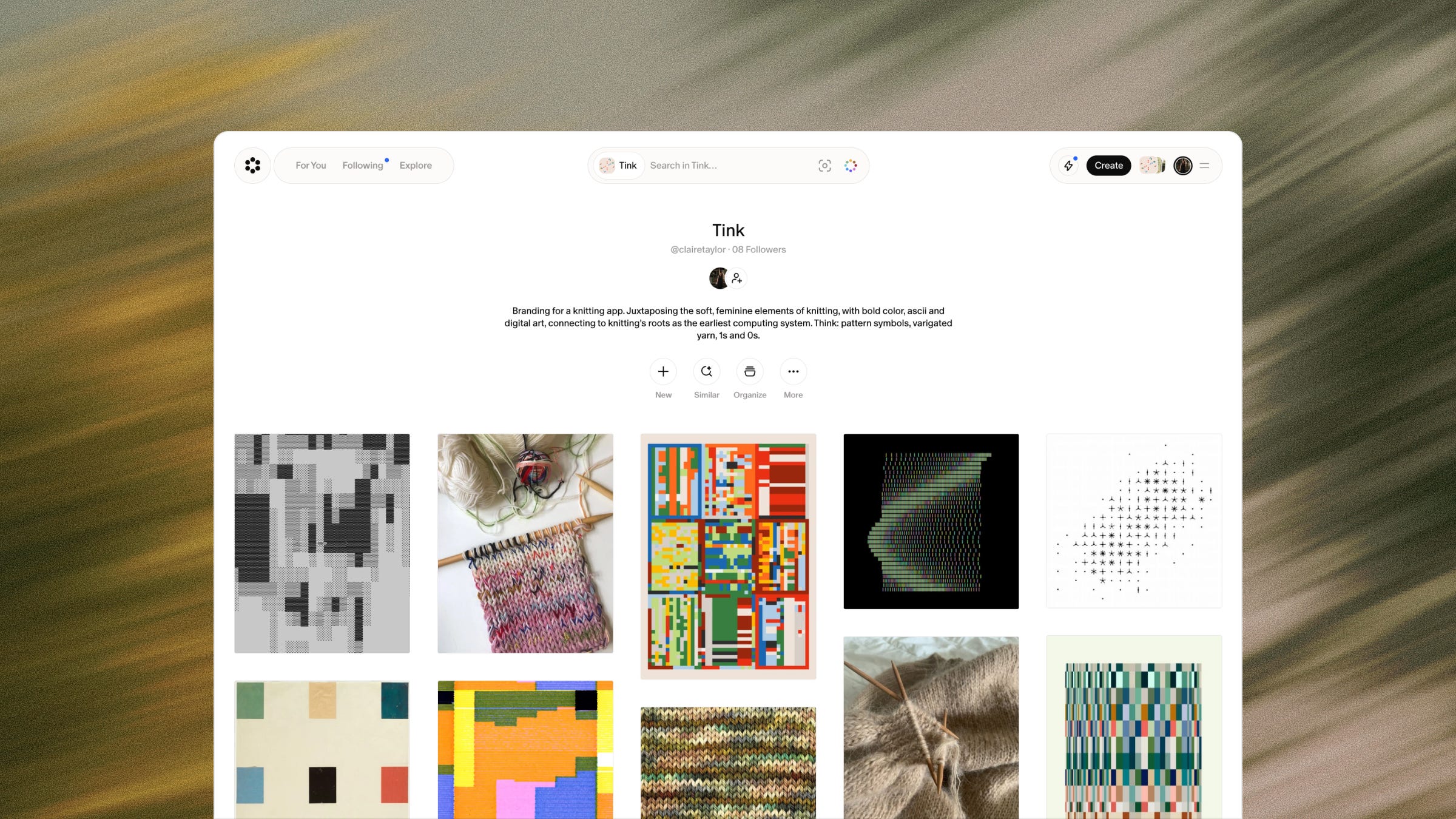
For visual tasks like: brainstorming the art direction of a side project, generating an image pack for a new deck template, or creating a new preset theme in Chronicle, I always start with a moodboard.
Cosmos is my favourite for this - although I’m still a sucker for the infinite canvas of Figjam. When I’m done, I zoom out and find the connections, the patterns. I’ll often feed the moodboard into Claude and ask it to describe what it sees. I can then turn this into prompts for generating brand kits and image prompts. I’ll also add these to my Notion journal to include as context.
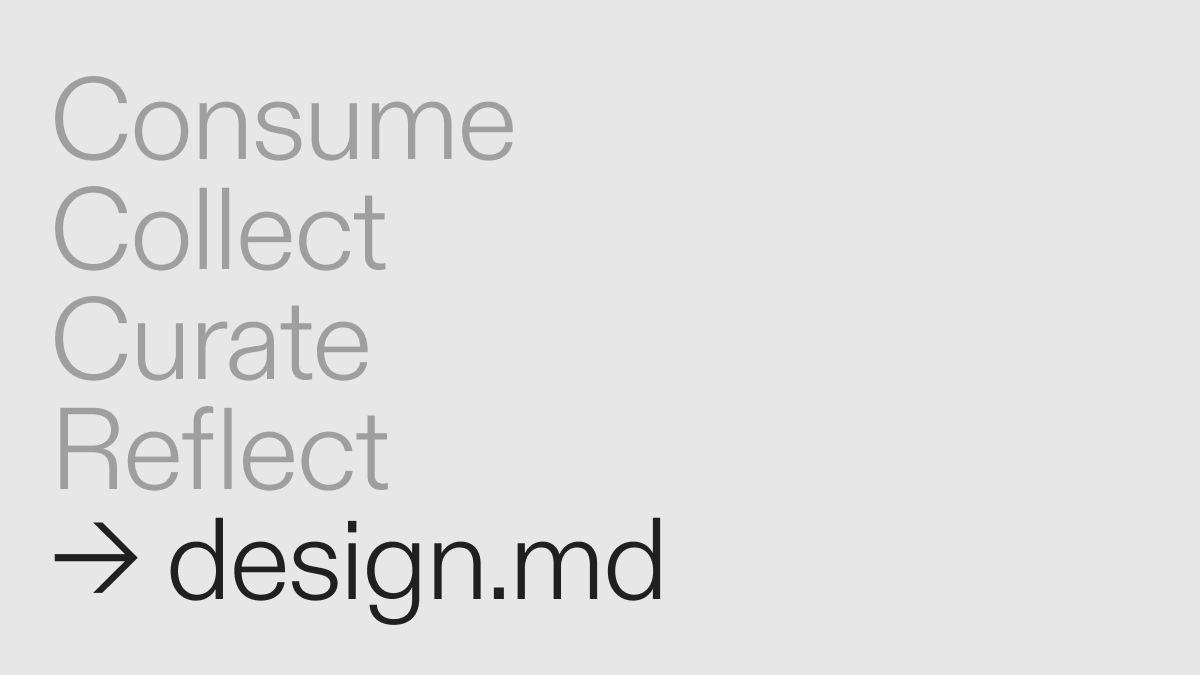
Make your taste tangible by turning into a skills.md file
You’re putting in the reps and understanding your taste better.
But how does this turn into something you can practically use without ongoing effort? When you prompt, how do you use this context to create better outputs?
I was inspired by Emil Kowalski’s skill for motion design. I wanted to see if I could turn these musings in my journal into a set of reusable heuristics. I created a new markdown file, called it claire-design.md, jotted down key headings (motion, layout, typography, personality, etc).
I setup a Notion agent that reviews my journal, sees if there’s any new principles or guidelines that need updating in my personal skill file. It suggests edits that I then review, (I never blindly let it edit without my consent).
I can then use this with Claude Code, Cursor or Figma Make when prototyping. It looks at the relevant sections and creates something that is guided by my opinion and taste.
I’m keeping this private for now, but I might share in future if enough people are curious (let me know)!
Keeping an ideas backlog
I’m married to a software engineer, so our conversations often turn into ideas for products. This got to the point where we now have our own studio where we build these ideas (sevenounce.computer).
I have another Notion database where I drop in ideas and hurriedly take notes as we discuss over a glass of wine. I’ll often hit record on Granola to capture ideas because there’s no way I’m going to type fast enough in the moment.
Find a place that works for you to jot down your ideas, so that when a new tool comes along and you want to test it out, you’ve got a real use case to truly test it with (and your credits won’t get wasted on something throwaway).
Using AI to challenge or frame my thinking differently
While I don’t use AI to write for me, I’ll give it a bunch of context (meeting notes, my moodboards or ideas), and then ask it to challenge my proposal. In this way, I get it to act like the Devil’s Advocate.
Try out this prompt:
Help me improve my thinking by surfacing credible counter-arguments, highlight potential assumptions or flaws, and raising tough questions that encourage deeper reflection. Be constructive and respectful, aiming to strengthen my reasoning.
What you get back helps you frame your thinking in a different way. It hasn’t done the thinking for you, instead it’s created a space for you to diverge and converge on a solution.
The tools or process may change. But your ability to think critically and understand the nuance in what makes good design, that’s worth investing in.
I’d love to hear how your collecting your own contexts, creating your own wiki, or how you’re thinking about taste.
This is Part I of turning my Friends of Figma talk into a series of tips and techniques to help others on their journey of building and designing with AI.
Next up:
x Claire
Appendix - go deeper:
Notes on Taste - are.na
Agents with Taste - Emil Kowalski
Building a Knowledge Base - Lennon Cheng
I love the idea of sitting down with the things I’ve read or watched during the week, and writing down what I appreciated or took from it. I’m going to try this tonight, thank you☺️
I too would self-describe as a virtual hoarder!!! My notes app is a disaster, i have saves and pins and folders all over the place, and I’ve tried and then abandoned too many notion setups to count at this point…. But im sort of obsessed with this formula of marrying the distinctly human and personal observational practice with the data gathering and analysis capability of AI. This set up you described is fascinating — will def be reading pt 2 & 3!